বিশ্বাস এমন পাখি যা ভোর যখন অন্ধকার থাকে তখন আলো অনুভব করে।
- রবীন্দ্রনাথ ঠাকুর
Faith is the bird that feels the light when the dawn is still dark.
- Rabindranath Tagore
About
When I’m not working my day job as a Software Developer. I like learning about history, exploring
open source/self hosted technologies, and appreciating pixel art.
Work Experience
Software Developer (June, 2024 - June, 2025)
As a Full Stack Developer at CCRPC (Champaign County Regional Planning Commission):
The US Census Bureau’s data and geopgraphical boundaries are accessible through 2 different APIs.
Traditionally planners would have to manually join these two tables with their GEOIDs. This process
was time consuming, required python scripting knowledge, and GEOIDs would differ from dataset to dataset.
I joined was tasked with producing a QGIS Plugin
that automatically combines Census Data and geographical boudnaries with a neat user friendly GUI.
The original codebase was 3000+ lines and had limited functionality, extensiblity, and exposed API keys.
By rewriting it, I was able to reduce it to under 1000 lines while increasing performance, functionality, and extensibility.
Sand and gravel are two extremely sought-after raw materials in the global market. Course sand dredged from rivers is used in
semi-conductor and glass manufacturing. Smoother sand has high demand in wetland reclamation, important for expand infrastracuture
in areas affected by climate change. Gravel is a crucial material for both concerete and aslphalt production. Flowing from the
himalayans down in to the Gangetic plain, the Bhramaputra deposists course stilt and gravel right into the Bengal Basin.
# Load necessary packageslibrary(raster)
library(rasterVis)
library(maptools)
library(rgdal)
# Set working directorysetwd("<YOUR DIRECTORY>")
# Load DEM filedem <-raster("RiverUSGS.tif")
plot(dem)
# Plot DEM mapplot(dem, col =rev(terrain.colors(50)))
# Set extent for croppingext <-extent(-92.2, -92.0, 38.4, 38.6)
# Crop DEM to desired extentdemnew <-crop(dem, ext)
plot(demnew)
# Plot cropped DEM mapplot(demnew, col =rev(terrain.colors(50)))
# Extract elevation values at each cellelevations <-getValues(demnew)
# Calculate flood riskflood_risk <- (1- (elevations /max(elevations)))
# Create raster object for flood risk layerflood_risk_raster <-raster(demnew)
values(flood_risk_raster) <- flood_risk
# Define custom color palette for flood risk mapmy_palette <-colorRampPalette(c("yellow", "red"))
# Plot DEM map with custom color palettelevelplot(demnew, col.regions =rev(terrain.colors(50)))
# Add flood risk map with custom color palettefloodriskplot <-levelplot(flood_risk_raster, alpha =0.5, add =TRUE, col.regions =my_palette(100))
floodriskplot
library(sf)
boundary <-st_read("Addresses.shp")
flood_data <-read.csv("flood_data.csv")
plot(flood_data$Height, flood_data$Discharge)
df2 <-data.frame(discharge = flood_data$Discharge, height = flood_data$Height)
# Save flood risk mapwriteRaster(flood_risk_raster, "flood_risk.tif", format ="GTiff", overwrite =TRUE)
df <-data.frame(Elevation = elevations, Flood_Risk = flood_risk)
# Create a line chart to show the relationship between elevation and flood riskplot(df$Elevation, df$Flood_Risk, type ="l", xlab ="Elevation", ylab ="Flood Risk", main ="Elevation vs Flood Risk")
noaa_data2 <-read.csv("RiverData2.csv")
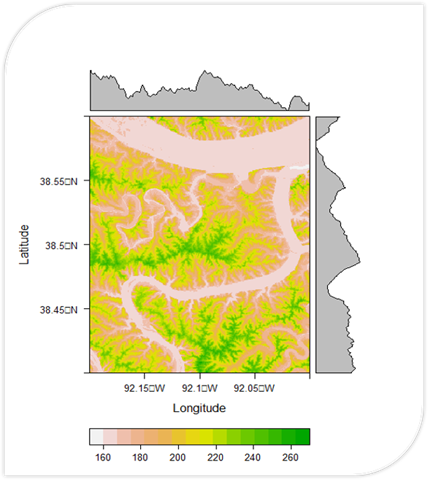
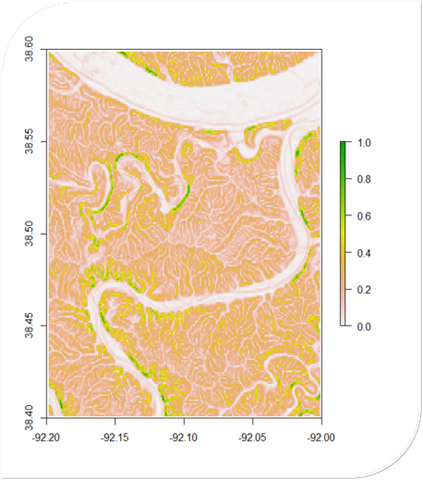
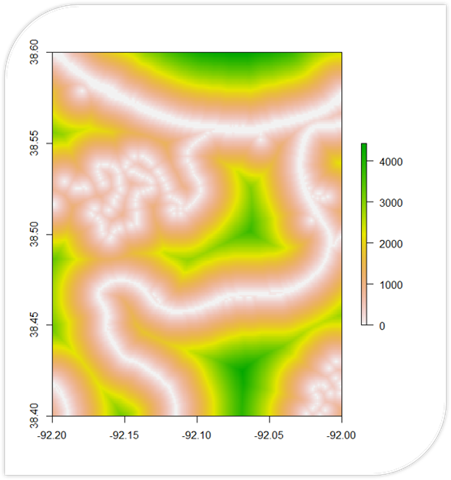
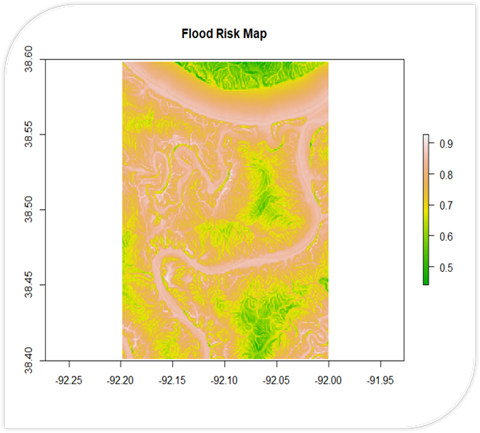
A Flood Risk Calculator written in R. It uses DEM data to calculate slope and proximity (shown in their
own respective maps). These are used to calculate a final flood risk assessment on a scale of 0 to 1.
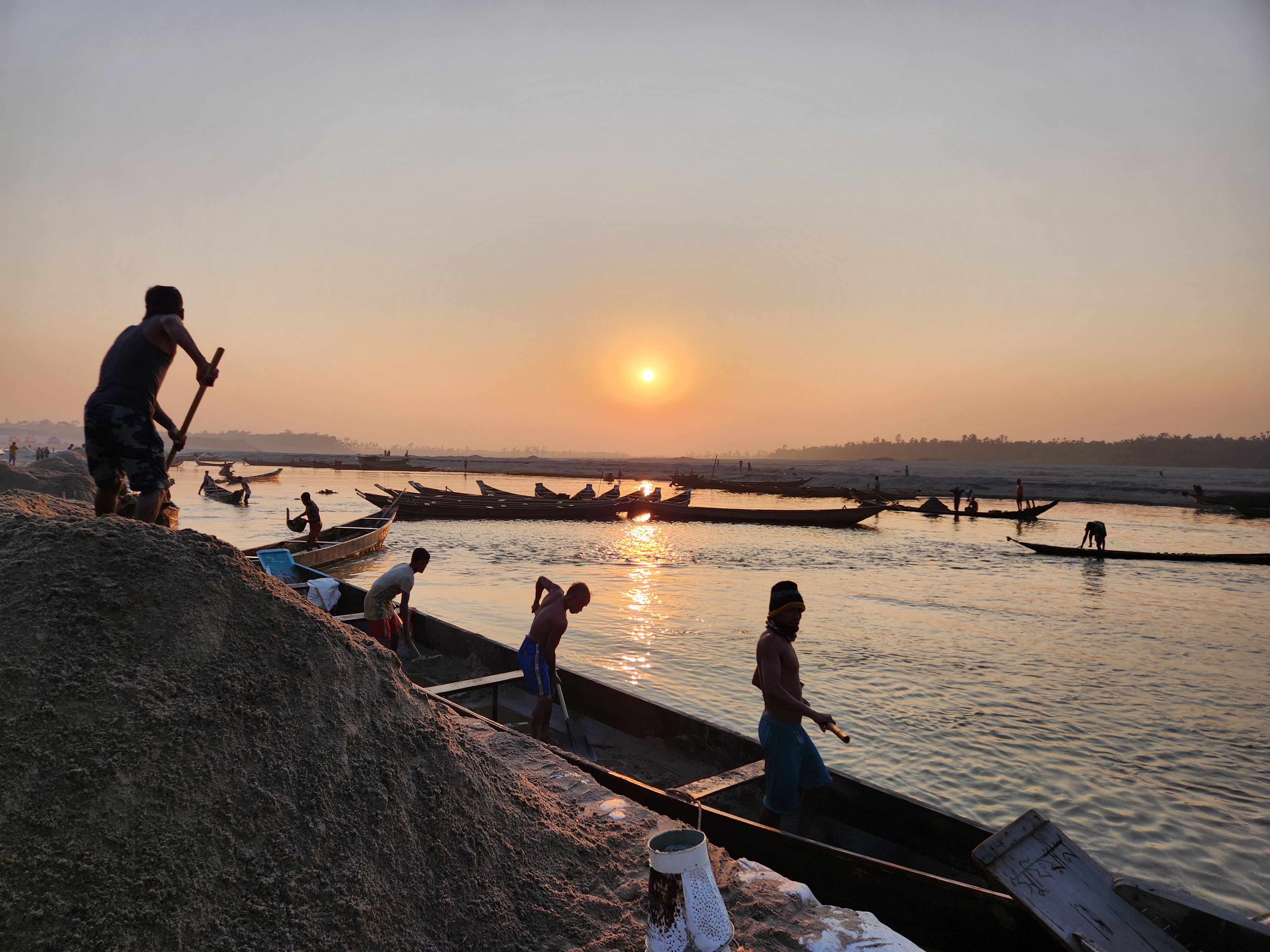 Sand and gravel are two extremely sought-after raw materials in the global market. Course sand dredged from rivers is used in
semi-conductor and glass manufacturing. Smoother sand has high demand in wetland reclamation, important for expand infrastracuture
in areas affected by climate change. Gravel is a crucial material for both concerete and aslphalt production. Flowing from the
himalayans down in to the Gangetic plain, the Bhramaputra deposists course stilt and gravel right into the Bengal Basin.
Sand and gravel are two extremely sought-after raw materials in the global market. Course sand dredged from rivers is used in
semi-conductor and glass manufacturing. Smoother sand has high demand in wetland reclamation, important for expand infrastracuture
in areas affected by climate change. Gravel is a crucial material for both concerete and aslphalt production. Flowing from the
himalayans down in to the Gangetic plain, the Bhramaputra deposists course stilt and gravel right into the Bengal Basin.